Memory box
I led the MVP from 0 to 1 for the Memory Box app. Based on user research, I defined a features strategy with a strong focus on accessibility. The goal was to design a digital product that makes sharing family memories simple, intuitive, and comfortable even for people with limited tech experience.
Skills
Desk research
User research
Competitive analyse
Workshop
Product strategy
Prototyping
Testing
Accessibility
Deliverables
0 to 1
Clikable Prototypes with instructions of implementation
Files with animations
Design System in Figma
Files with research outcomes
Role
Product Designer
Company
Startup
(2022 - 2023)
Overview
App about emotions and family
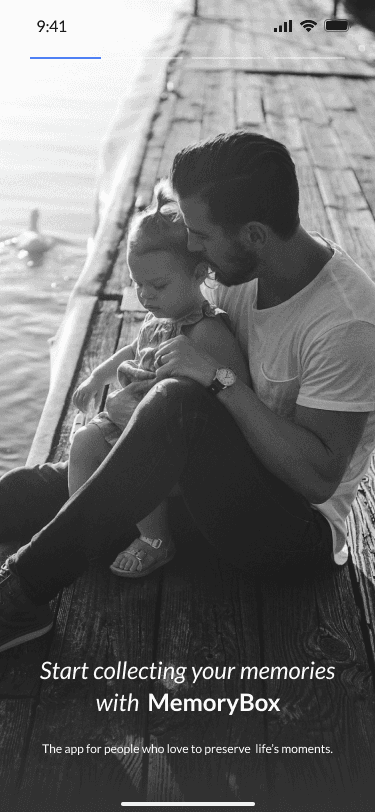
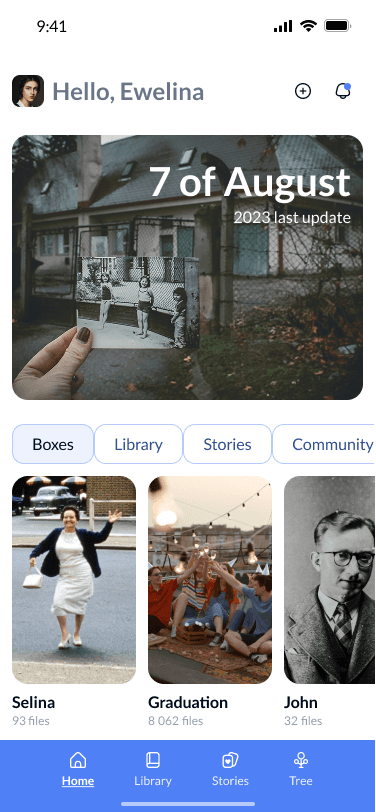
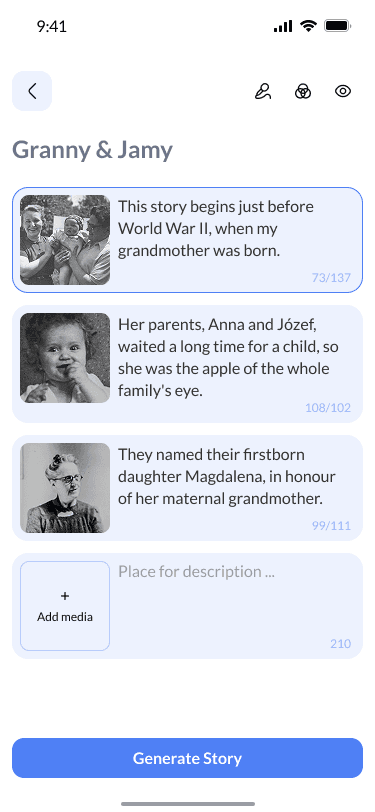
Many families struggle to preserve and organize their personal and ancestral histories, such as photos, audio, documents, and memories. In most cases, these are scattered across digital and analog platforms. The idea was to create a place where all information about family members can be collected and shared. Users can visualize it in a family tree, create short videos (Stories), capture meaningful moments, and save everything in organized folders (Boxes).
Research
Users needs research
I opened the research phase by speaking with stakeholders to align on product goals and get a clearer picture of the target audience. Alongside those conversations, I studied Facebook groups and forums where people naturally discuss family memory-keeping. It is a way to observe real behavior before introducing interview bias.
The deep interviews were structured around five core questions:
What drives people to collect and preserve family memories and artifacts?
How do people go about collecting and archiving them? What do they keep, where, in what format, and what gets in the way?
If and how do people share what they've collected (with whom, through what tools, and under what conditions)?
If and how do people publish family memories beyond their immediate circle (to whom, how, and what friction do they encounter)?
What would their ideal tool or method for collecting, archiving, sharing, and publishing look like?
Interviews process
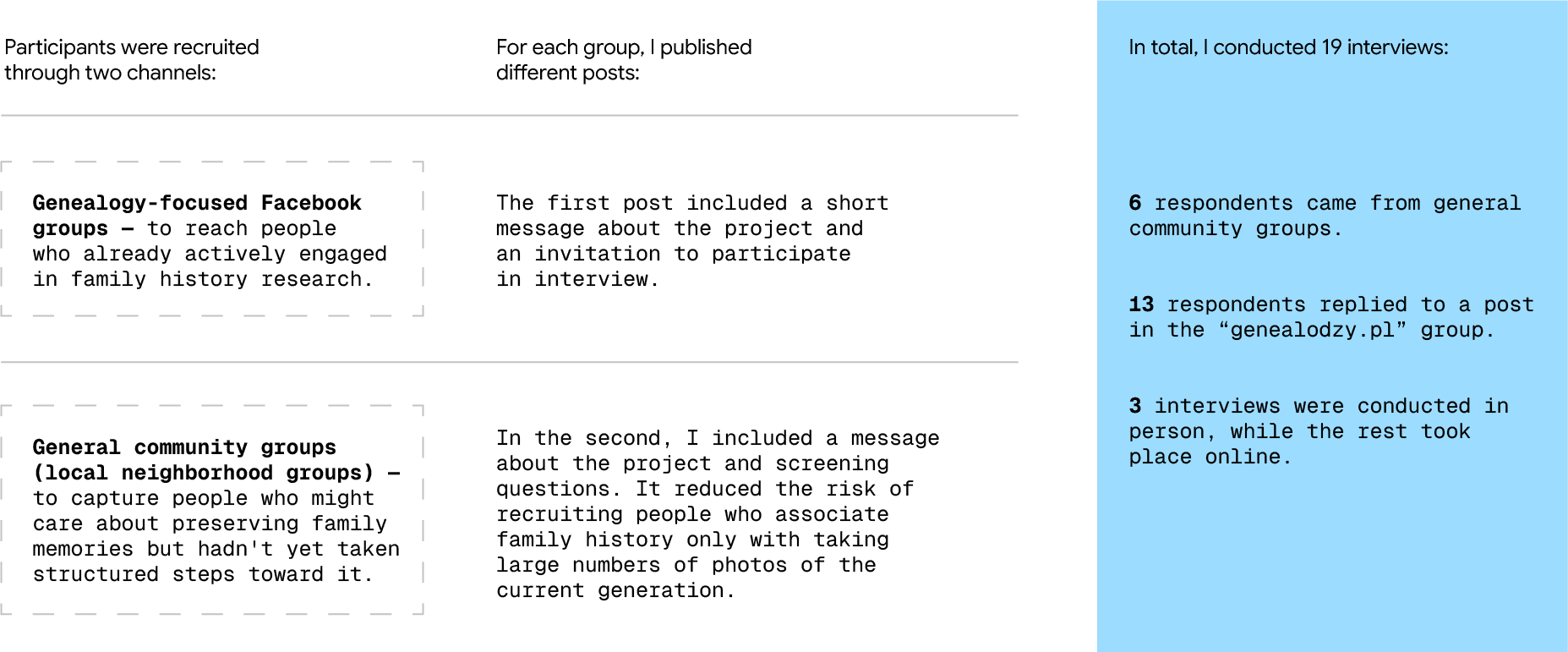
I started by creating empathy maps for each respondent to better understand what they say, think, feel, and do, along with their frustrations and needs. To make sense of the data, I ran a cluster analysis, which helped reveal patterns and turn them into clear insights. These insights were then translated into a set of feature recommendations that guided the product direction.
Through this process, several themes became clear. People store memories across multiple tools such as Word documents, Excel files, phone galleries, and Facebook groups. A large number of apps makes everything feel scattered and hard to manage. Existing platforms like MyHeritage, Ancestry, and FamilySearch are often perceived as too complex, especially for less tech-savvy users. At the same time, there is a strong emotional motivation: people genuinely care about preserving family history for future generations.
Looking at the market, I found that none of the existing tools fully support storytelling with rich media, simple collaboration across family members, or an accessible experience for non-English-speaking users. These gaps became key opportunities to focus on in the product.
Analysis
Value proposition, persona & customer journey
I created a value proposition map for each persona to better connect user needs with potential features. Together with personas and journey maps, this helped clarify priorities and focus the MVP on solving the most critical pain points.
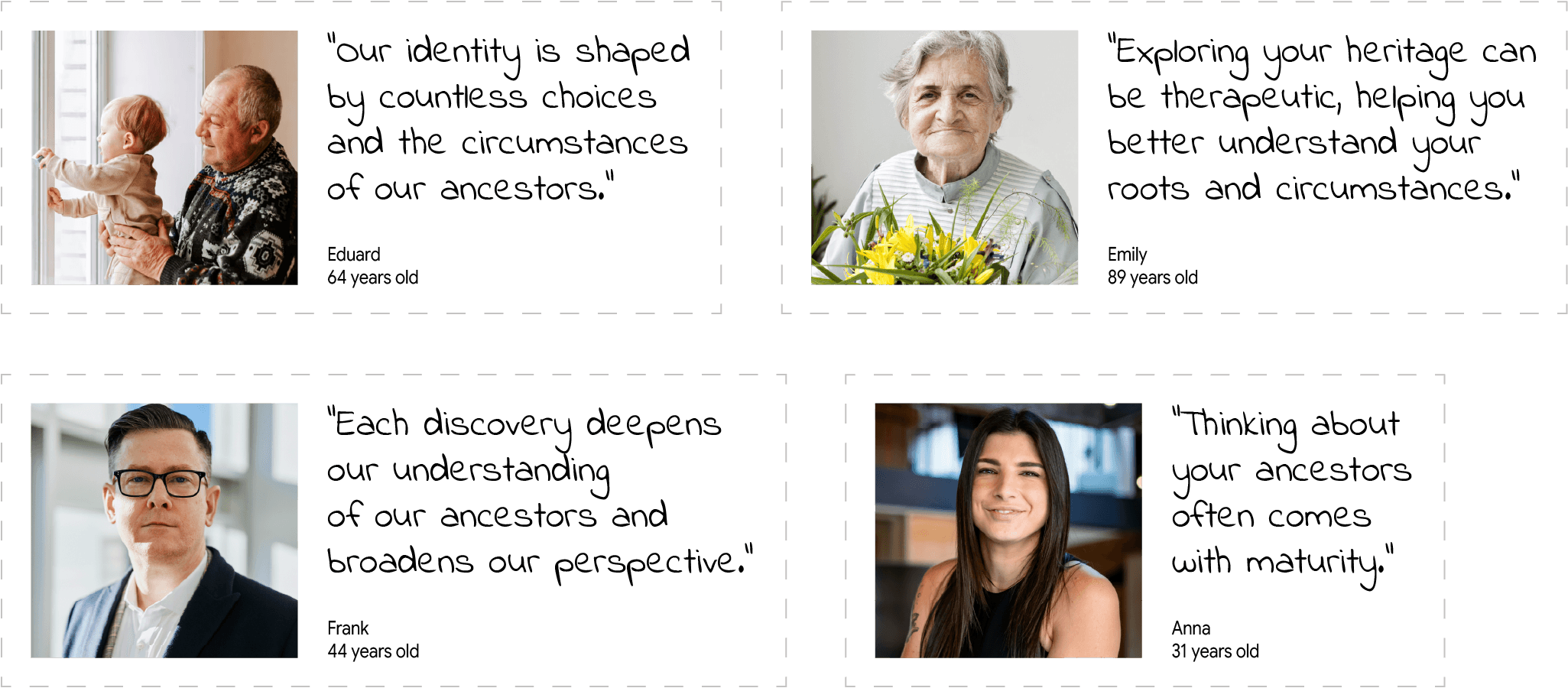
Respondents quotes
Strategy
North star metrics
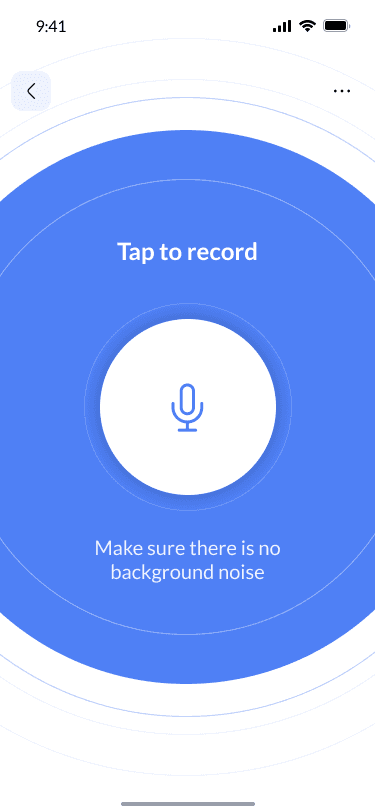
I framed the solution around three core features that respond directly to user needs: Story Creation, where users can turn memories into audio and visual narratives (manually, semi-automatically, or with AI support); a Memory Library organized into “Boxes,” designed as a flexible, taggable space for storing photos, documents, and audio; and Avatar Creation to represent family members in a more personal and engaging way.
From there, product manager and I defined a clear measurement strategy to understand how the product performs over time. Instead of focusing on a single metric, we structured success across five metrics.
North star metrics

Ideation
Scenarios/ Sketches/ User flows
Based on the insights gathered during research, I formulated a hypothesis around how people might use the app in their everyday lives. I translated this into realistic scenarios that reflect moments when users would want to capture or share family memories.
These scenarios became the foundation for structuring the product. I used them to define the information architecture and map out key flows, ensuring they align with real user contexts. From there, I moved into early sketches to quickly explore and shape the first screen concepts.
IA
Mapping flows
To understand how different user flows connect, I mapped out the information architecture. This made it easier to identify overlaps between key actions and spot potential friction points early on. It also helped shape a clear navigation structure and prioritize content in a way that reflects how users naturally move through the product.
Prototyping & testing
Usability testing & recruitment criteria
I conducted usability testing with 10 participants (6 women and 4 men) who are actively interested in family history and motivated to preserve it. Sessions were held both in person and remotely, depending on availability.
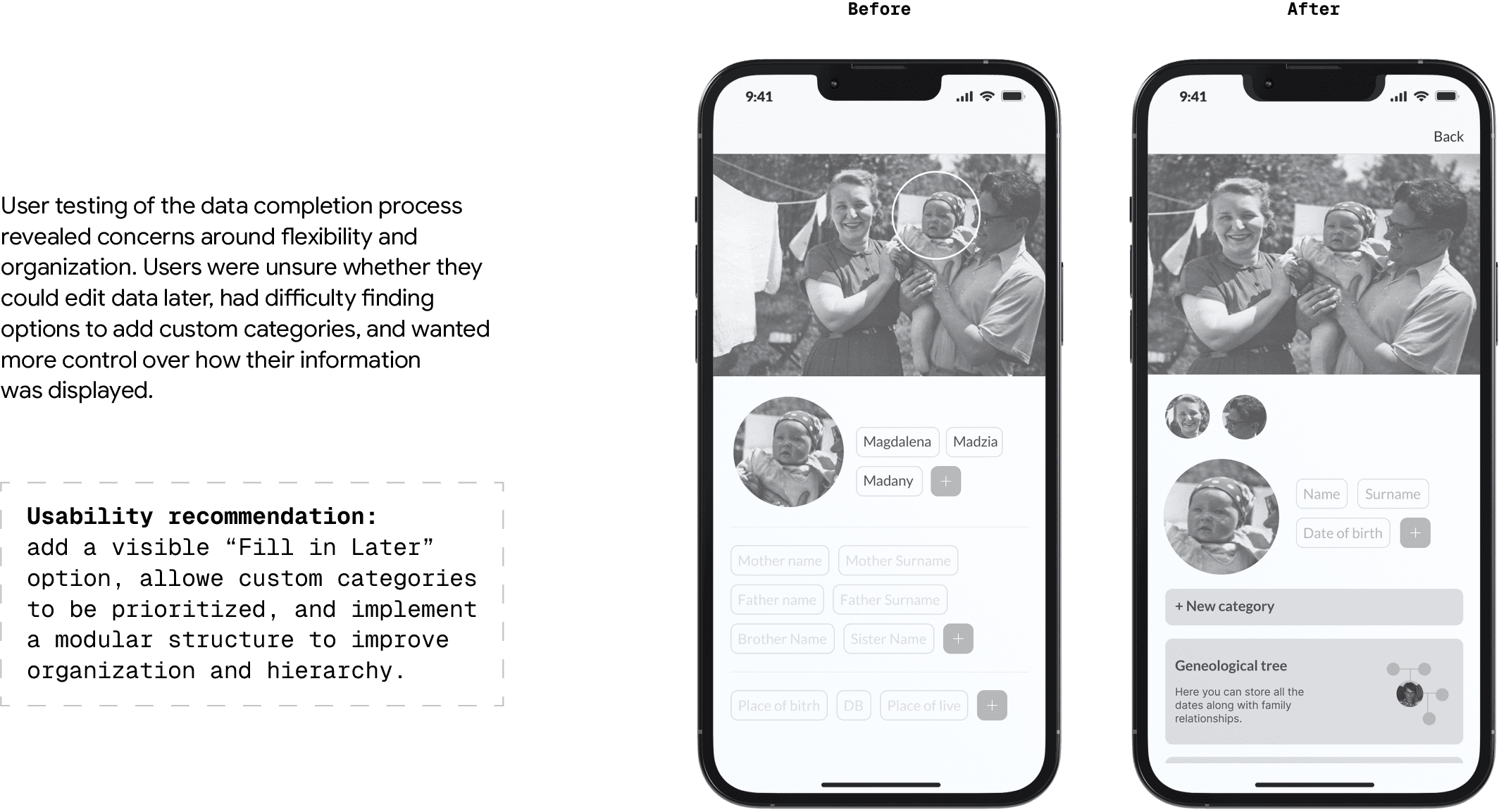
Users interacted with a mobile prototype, exploring it freely before completing key tasks based on real scenarios. During testing, I encouraged them to think aloud to capture their thoughts and friction points. This approach helped validate the core concept and identify areas for improvement early on.
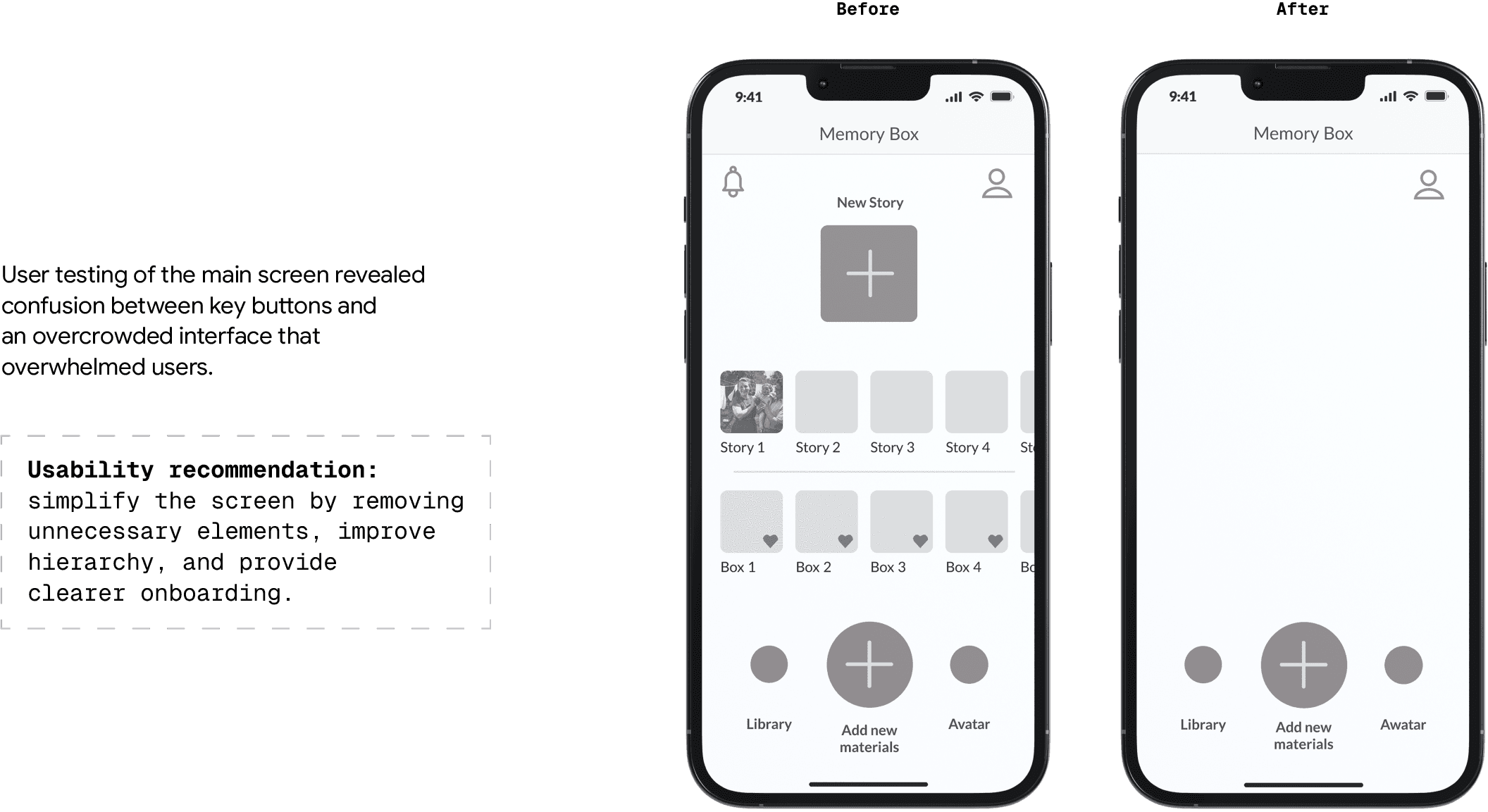
Home screen
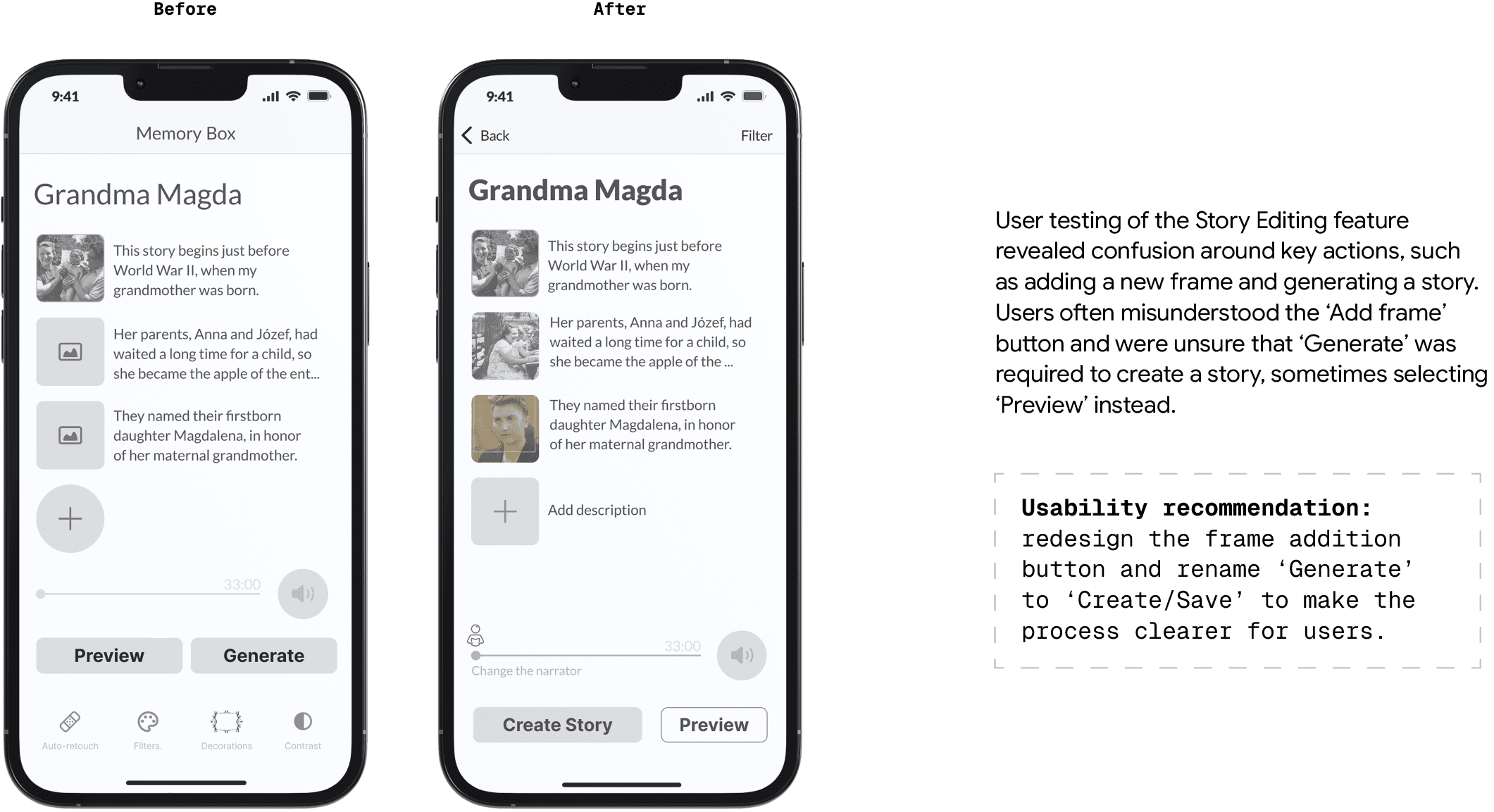
Story editor
Data flow
UI
How did the UI appearance idea emerge?
As the target user group is generally aged 35–60, accessibility was a key part of the UI design. As you can notice, the text and buttons are relatively large. The color palette also uses high contrast to improve readability.
The blue color was chosen to be associated with genetic variability and ethnicity. I conducted research on heritage apps, and most of them use orange or green interfaces, which are typically associated with trees. However, Memory Box is different. While it does offer the ability to build a family tree, it aims to be associated with technology and a contemporary feel.
The ability to create boxes and stories helps strengthen brand recognition and allows the product to stand out from competitors.
Impact
The MemoryBox project really resonated with users, both emotionally and in how easy it was to use. In testing with 20 participants, people found the prototype more intuitive than other genealogy tools and noticeably more engaging on an emotional level.
What I learned
What I learned as product designer?
I learned that progressive disclosure can significantly improve adoption. Revealing features gradually, supported by AI, helped reduce overwhelm without limiting functionality. I also saw that emotional value drives engagement: users cared more about meaningful outcomes, like preserving memories, than about features themselves, which shifted how I prioritized the product. Finally, designing for less tech-savvy users reinforced that simplicity requires deliberate decisions. It would create an experience that feels intuitive while handling complexity behind the scenes.